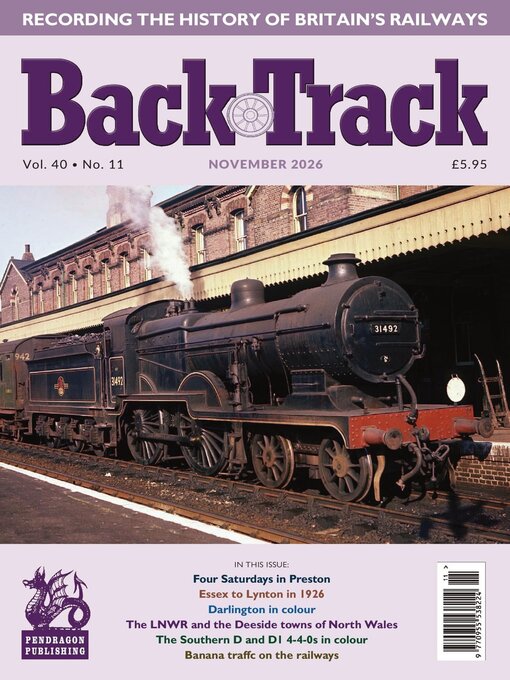
 Volume 40 No 11 - November 2026
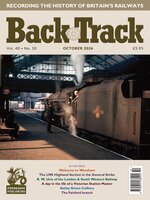 Volume 40 No 10 - October 2026
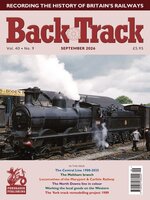 Volume 40 No 9 - September 2026
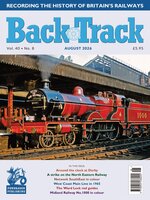 Volume 40 No 8 - August 2026
 Volume 40 No 7 - July 2026
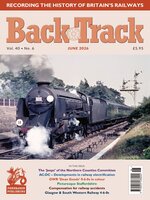 Volume 40 No 6 - June 2026
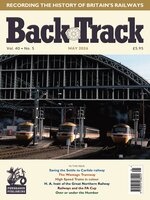 Volume 40 No 5 - May 2026
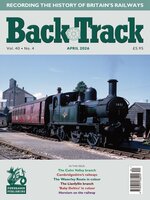 Volume 40 No 4 - April 2026
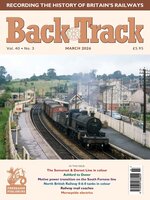 Volume 40 No 3 - March 2026
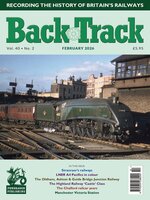 Volume 40 No 2 - February 2026
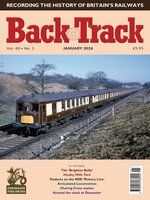 Volume 40 No 1 - January 2026
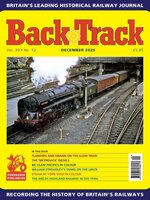 Volume 39 No 12 - December 2025
 Volume 39 No 11 - November 2025
 Volume 39 No 10 - October 2025
 Volume 39 No 9 - September 2025
 Volume 39 No 8 - August 2025
 Volume 39 No 7 - July 2025
 Volume 39 No 6 - June 2025
 Volume 39 No 5 - May 2025
 Volume 39 No 4 - April 2025
 Volume 39 No 3 - March 2025
 Volume 39 No 2 - February 2025
 Volume 39 No 1 - January 2025
 Volume 38 No 12 - December 2024
Backtrack, Britain's Leading Historical Railway Journal, covers all aspects of railway history from its earliest days through to more recent events up to around ten years before now including, early railway history from the 'pre-Stephenson' era, steam, diesel and electric locomotive history, railway company history, railway carriages and wagons, railway stations, railway ships, hotels & road vehicles, railway economic and social history, railway publicity and advertising. Backtrack's contributors include many of today's leading railway history writers. From the beginning the magazine has maintained a reputation for its production values and each issue contains a wealth of photographs reproduced to the highest standards, including a generous selection of historic colour. Published monthly, Backtrack is THE magazine for all who are interested in British railway history.
Much Waiting in the Cold
THE SOUTHERN D AND D1 4-4-0s • These South Eastern & Chatham Railway 4-4-0s were designed for the company's express passenger trains and 51 of them were built between 1902 and 1907. Excellent engines they turned out to be and as elegant as engines of the Edwardian era could be, as witness the restored No.737 in the National Collection. The 1917 decision that Continental boat expresses should be concentrated on the Chatham route from Victoria presented the railway with a challenge since a weight restriction there precluded locomotives heavier than the existing E Class. The solution was to rebuild some of the E and D Class engines with new cylinders and Belpaire fireboxes, becoming Class D1 and E1. 21 of the Ds were rebuilt between 1921 and 1927, the last remaining in service until 1961.
‘LIVELY POLLY’ AND ‘WILLIAM GRIFFITHS’ THE EVOLUTION OF THE KITSON LIGHT RAILWAY ENGINE
“IT'S ALL GONE BANANAS” A SHORT HISTORY OF TRANSPORTING BANANAS ON THE RAILWAYS
ESSEX TO LYNTON IN 1926 • TONY HIGGS tracks an epic journey made by two adventurous Essex ladies in the year of the General Strike.
FOUR SATURDAYS AT PRESTON PART ONE • STEPHEN G. ABBOTT outlines summer Saturday operations at this major junction, beginning in the last days of steam and traditional working.
AT DARLINGTON • In the story of the railway age Darlington was in at the beginning, with the opening of the Stockton & Darlington Railway in 1825. Later in the century the town became an important centre in the manufacture of locomotives and rolling stock, as well as a junction on the East Coast Main Line. While the railway construction industry declined and closed in the 1960s, Darlington's main line status remains; indeed, the station has recently gained two new platforms as part of a redevelopment project. We visit during steam days – and might well return with some more recent scenes…
40B – RUNNING THE RAILWAY PART ONE
A DAY IN THE LIFE OF A VICTORIAN STATION MASTER PART TWO INCIDENTS, ACCIDENTS AND FRAUD
LNWR STATIONS AND THE DEESIDE TOWNS OF NORTH WALES
A LOOK BACK AT THE HULL & BARNSLEY RAILWAY • What started out as the Hull, Barnsley & West Riding Junction Railway & Dock Company was incorporated in 1880 to challenge the monopoly of the North Eastern Railway and dock ownership around Hull. Its heavily engineered route opened in 1885 but the Hull & Barnsley Railway engaged in a rate war with the Hull Dock Co. and NER and fell further into debt. In the end it amalgamated with the NER in 1922, soon becoming part of the London & North Eastern Railway group. Little remains of it today.
ELY BY SEMAPHORE • The former Great Eastern Railway station at Ely, in Cambridgeshire, lies on the route from London to Kings Lynn, also being an important junction for lines to Peterborough via March, Norwich via Thetford and Ipswich via Bury St. Edmunds. TOM HEAVYSIDE visited the...